Introduction
The average American pays over $290 a year in bank fees — and most don’t even realize it until they check their statement.
According to the Consumer Financial Protection Bureau (CFPB), overdraft and non-sufficient funds (NSF) fees alone generated over $15 billion in revenue for U.S. banks in a single recent year. That’s not money banks earned from investments or loans — it’s money taken directly from everyday account holders like you.
Bank fees are one of the most overlooked drains on personal finances. They’re small enough to ignore month to month, but over a year or a decade, they can quietly erode thousands of dollars in savings.
In this guide, you’ll learn exactly which bank fees to watch for, why banks charge them, and — most importantly — proven strategies to minimize or eliminate them entirely. Whether you bank with a major national institution or a local credit union, this information applies to you.
Focus keyword: bank fees
What Are Bank Fees and How Do They Work?
Bank fees are charges that financial institutions apply to your account for specific transactions, account maintenance, or failure to meet certain conditions. They appear in your account’s fee schedule — a document most people never read when they open an account.
Banks are legally required by the Truth in Savings Act (enforced by the CFPB and FDIC) to disclose all fees before you open an account. The problem is that these disclosures are often buried in lengthy fine print, and fee structures can change with 30 days’ notice.
There are two broad categories of bank fees:
- Fixed fees: Charged on a predictable schedule regardless of how you use your account (e.g., monthly maintenance fees)
- Transaction or behavior-based fees: Triggered by specific actions — or inactions — such as falling below a minimum balance or using an out-of-network ATM
Understanding the difference helps you target the right strategies to reduce what you’re paying.
The Most Common Bank Fees (and What They Cost)
According to Bankrate’s 2026 checking account fee survey, the national average monthly maintenance fee for a non-interest checking account is $15.33 — or about $184 per year just to keep your account open. Here’s a breakdown of the fees you’re most likely to encounter:
1. Monthly Maintenance Fees
These are flat fees charged simply for holding an account. Major banks like Bank of America, Chase, and Wells Fargo charge between $12 and $25 per month unless you meet waiver conditions — such as maintaining a minimum daily balance or setting up direct deposit.
2. Overdraft Fees
When you spend more than your account balance, the bank may cover the transaction and charge you an overdraft fee. Historically around $35 per incident, these fees have come under regulatory pressure. In 2024, the CFPB finalized a rule capping overdraft fees at $5 for large banks (those with over $10 billion in assets), though legal challenges may affect implementation. Always check your specific bank’s current policy.
3. Non-Sufficient Funds (NSF) Fees
If the bank declines a transaction instead of covering it, you may still be charged an NSF fee — typically $25 to $35. You get penalized even though the purchase didn’t go through.
4. ATM Fees
Using an out-of-network ATM can cost you twice: your bank charges you a fee (averaging $1.52 per Bankrate), and the ATM operator charges its own fee (averaging $3.19). That’s roughly $4.71 for a single cash withdrawal.
5. Wire Transfer Fees
Domestic wire transfers typically run $15 to $30 per transaction at traditional banks. International wires can reach $45 or more, plus unfavorable exchange rates. For more detail, see our guide on Wire Transfers: How They Work and When to Use Them.
6. Paper Statement Fees
Many banks now charge $1 to $3 per month if you opt for paper statements instead of e-statements. Small but avoidable.
7. Minimum Balance Fees
Some accounts require you to maintain a minimum daily or monthly average balance — sometimes as high as $1,500. If you drop below it, you’re charged a fee ranging from $5 to $25.
8. Returned Deposit Fees
If someone writes you a bad check and you deposit it, your bank may charge you a returned deposit fee — typically $10 to $19 — even though you’re the victim.
How to Avoid or Minimize Bank Fees: Step-by-Step
The good news: most common bank fees are entirely avoidable if you take proactive steps. Here’s a practical action plan:
Step 1: Read Your Fee Disclosure Schedule Now
Log into your online banking portal and locate your account’s fee schedule. Most banks post it under "Account Disclosures" or "Terms and Conditions." List every fee that applies to your account type. You can’t fight what you don’t know.
Step 2: Set Up Direct Deposit
At most major banks, having a qualifying direct deposit — often as low as $250 to $500 per month — waives the monthly maintenance fee entirely. If your employer offers direct deposit, this is usually the easiest fee-elimination strategy available.
Step 3: Enable Overdraft Protection (Wisely)
Link your checking account to a savings account as a backup. Most banks will transfer funds automatically to cover a shortfall, typically for a much smaller fee ($10 or even $0 at some institutions) compared to a standard overdraft fee. Just don’t rely on this as a habit — it’s a safety net, not a spending strategy.
Step 4: Use In-Network ATMs Only
Before traveling or making a cash withdrawal, use your bank’s ATM locator app to find a surcharge-free machine. Many banks and credit unions also participate in fee-free ATM networks like Allpoint (55,000+ ATMs nationwide) or MoneyPass.
Step 5: Switch to a No-Fee Account
If your current bank charges fees you can’t waive, consider switching. Online banks — such as Ally, Marcus by Goldman Sachs, or SoFi — typically offer no-fee checking and savings accounts with competitive interest rates. Credit unions also tend to charge fewer fees than large commercial banks, according to the NCUA (National Credit Union Administration).
Step 6: Negotiate Directly with Your Bank
This works more often than most people expect. If you’ve been a loyal customer and get hit with a one-time fee (especially an overdraft fee), call your bank and politely ask for a refund. Bankrate reports that nearly 80% of fee waiver requests are granted when customers ask. Banks want to retain customers.
Step 7: Go Paperless
Enroll in e-statements through your online banking dashboard. This eliminates paper statement fees instantly and often takes less than two minutes to set up.
The Real Cost of Ignoring Bank Fees
Let’s put this in concrete financial terms. Say you’re paying:
- $15/month in maintenance fees = $180/year
- Two overdraft fees per year at $35 each = $70/year
- Four ATM withdrawals per month at $4.71 = $226/year
- One wire transfer per month at $20 = $240/year
That’s $716 per year in bank fees — money that could be building interest in a high-yield savings account instead.
Over 10 years, assuming those fees stay constant and the money could have grown at a 4.5% annual yield, you’re looking at a lost opportunity cost of over $8,700. That’s a real number — not a hypothetical.
Common Mistakes to Avoid
Even financially savvy people make these errors when it comes to bank fees:
Mistake 1: Assuming Fee Waivers Are Automatic
Many people meet waiver conditions one month but not the next — and never notice the fee quietly reappears. Set a monthly calendar reminder to verify your balance or direct deposit requirements are being met. Don’t assume your bank will notify you when you fall out of compliance.
Mistake 2: Ignoring the True Cost of Overdraft Protection Programs
Some banks promote "overdraft coverage" programs as a convenience feature, but they can carry steep fees. Opting into overdraft coverage for debit card transactions is optional by law — the Federal Reserve’s Regulation E requires banks to get your explicit consent before enrolling you. If you haven’t opted in, your debit card transaction will simply be declined at the register rather than triggering a fee. Declining enrollment can save you hundreds.
Mistake 3: Not Comparing Accounts Before Opening
Opening a checking or savings account at the nearest branch without comparing fee structures is one of the most common and costly financial habits. Spend 20 minutes comparing two or three options — including an online bank — before committing. The fee differences over a 5-year period can easily exceed $1,000. For a deeper look at how to choose the right account, check out our guide to savings account interest rates.
Mistake 4: Keeping Dormant Accounts Open
Old accounts you rarely use can quietly rack up inactivity fees (typically $5 to $20 per month after 12 months of inactivity). Close accounts you no longer need — but check if a closure fee applies first.
Mistake 5: Overlooking Small Recurring Fees
A $3 paper statement fee sounds trivial. But $3/month × 12 months × 10 years = $360. Multiplied across several accounts, small fees add up. Do a full audit of every bank account you hold at least once a year.
Alternatives to Traditional Banks That Charge Fewer Fees
If your current bank’s fee structure can’t be fixed, here are three categories of alternatives worth exploring:
1. Online Banks and Neobanks
Pros: No monthly fees, no minimum balance requirements, higher APYs on savings, ATM fee reimbursements. Institutions like Ally Bank, Chime, and SoFi operate with lower overhead than brick-and-mortar banks and pass those savings to customers.
Cons: No physical branches, cash deposits can be complicated, customer service is phone or chat only.
2. Credit Unions
Pros: Member-owned and not-for-profit, so profits are returned as lower fees and better rates. The NCUA (equivalent to the FDIC for credit unions) insures accounts up to $250,000. Credit unions charge significantly fewer and lower fees than commercial banks on average.
Cons: Membership eligibility requirements (employment, geography, or organizational affiliation), smaller ATM networks, fewer digital features.
3. Fintech Platforms with Banking Features
Pros: Apps like Cash App, PayPal, and Current offer FDIC-insured accounts through partner banks, often with no fees and early direct deposit.
Cons: These are not banks themselves — they rely on banking partners, which introduces a layer of complexity. Verify FDIC pass-through insurance status before depositing significant funds.
Frequently Asked Questions About Bank Fees
Q: Are bank fees tax-deductible?
Generally speaking, personal bank account fees are not tax-deductible for most individuals. However, if you use a business checking account, fees may qualify as a business expense deduction. Consult a CPA for guidance specific to your situation.
Q: Can my bank change its fees without telling me?
Yes, but not without notice. Under federal law, banks must notify you at least 30 days in advance before implementing a fee change that could negatively affect you. That notice often comes as a small insert in your monthly statement or an email — easy to miss if you’re not paying attention.
Q: What’s the difference between an overdraft fee and an NSF fee?
An overdraft fee is charged when the bank covers a transaction that exceeds your balance. An NSF (non-sufficient funds) fee is charged when the bank declines the transaction. Both are costly. The key distinction is that with an overdraft, the payment went through; with NSF, it didn’t — but you still pay.
Q: Is the CFPB’s $5 overdraft fee cap in effect?
The CFPB finalized a rule in late 2024 capping overdraft fees at $5 for banks with over $10 billion in assets, with an implementation date in 2025. However, the rule has faced legal challenges, and enforcement may be delayed or modified. Check your bank’s current fee schedule for the most accurate information.
Q: How do I find out exactly what fees my bank charges?
Request a copy of your account’s "Schedule of Fees" or "Deposit Account Agreement" directly from your bank. It’s available online in your account portal under disclosures, or you can request it by phone or in person. The FDIC also maintains a consumer resource page that explains your rights regarding fee disclosures.
Key Takeaways and Your Next Step
Bank fees are a quiet but persistent drain on your financial health. The average American loses hundreds of dollars per year to fees that are, in most cases, entirely avoidable with basic awareness and a few proactive account management habits.
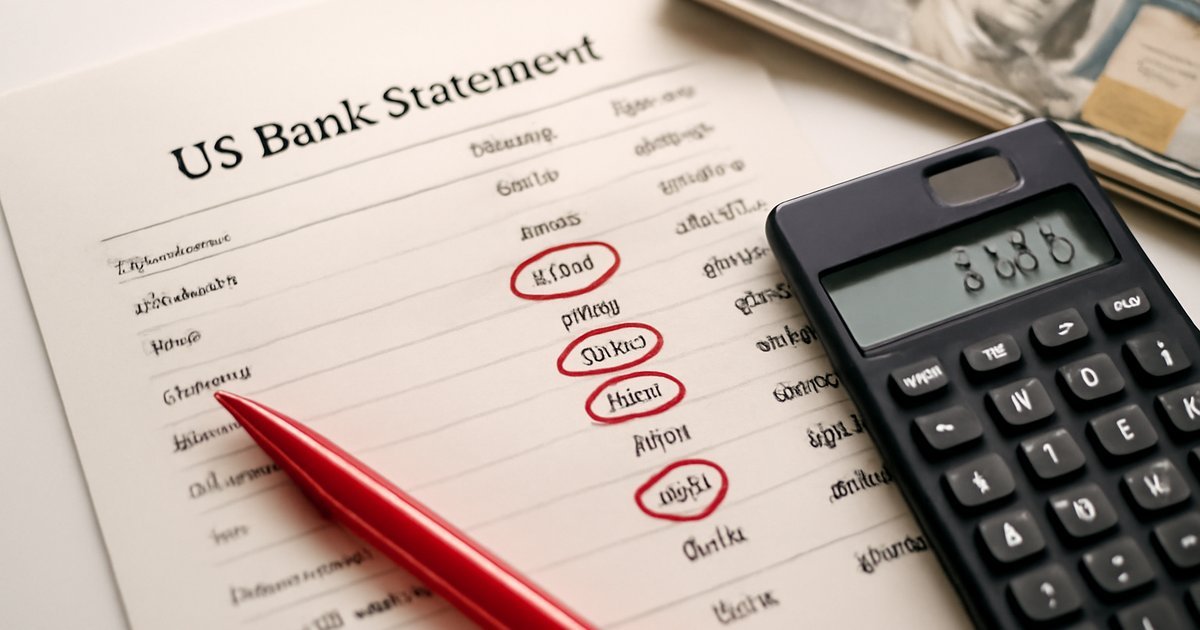
Start with a simple 20-minute audit: pull up your last three bank statements and highlight every fee you were charged. Calculate the annual total. Then use the step-by-step strategies in this guide to eliminate as many as possible — starting with direct deposit setup and in-network ATM use.
If your current bank’s fee structure is unavoidable, the landscape of no-fee online banks and credit unions has never been more competitive. You have options. Use them.
As a next step, consider comparing your current account against two alternatives using each institution’s publicly available fee schedule. The 20 minutes you spend today could save you thousands over the next decade.
This article is for educational purposes only and does not constitute financial, tax, or investment advice. Always consult a licensed financial advisor, CPA, or attorney before making financial decisions.