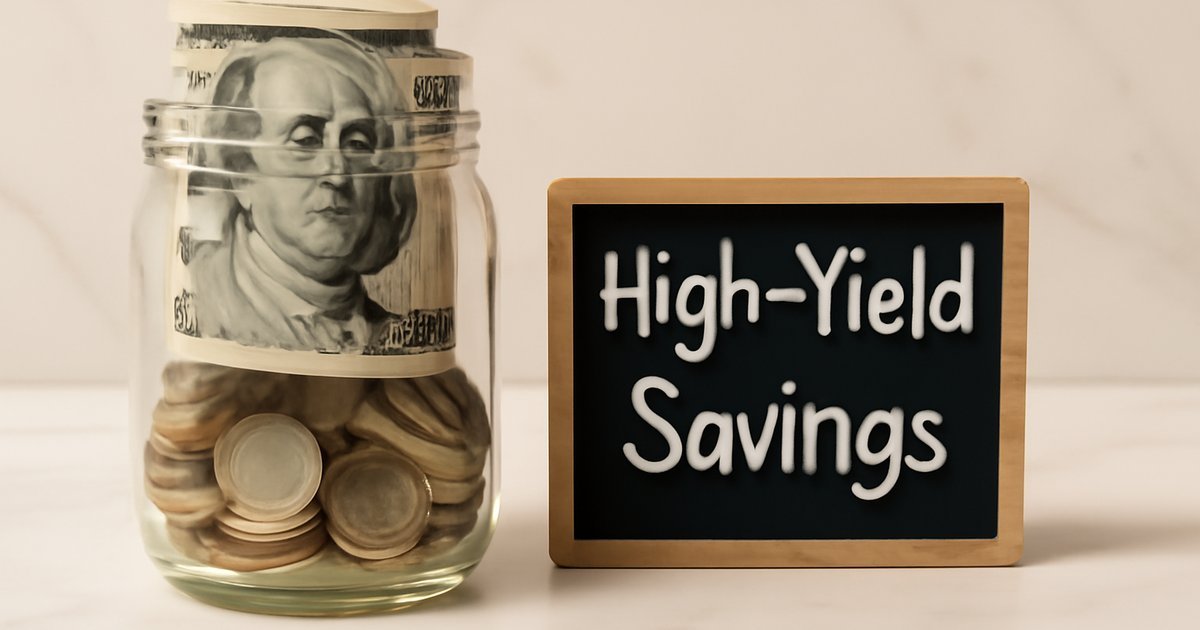
Savings Account Interest Rates: How to Earn More in 2026
Switching to a high-yield savings account could mean the difference between earning $50 a year and earning over $500 — on the exact same balance.
Why Your Savings Account Rate Matters More Than Ever
According to the FDIC, the national average interest rate on traditional savings accounts sits at just 0.46% APY as of early 2026. Meanwhile, the top high-yield savings accounts offered by online banks are paying anywhere from 4.50% to 5.00% APY — and in some cases even higher, depending on the product.
That gap is not trivial. If you have $20,000 sitting in a traditional savings account earning 0.46% APY, you’re collecting about $92 in interest per year. Move that same $20,000 to an account paying 4.75% APY, and you’re looking at $950 in annual interest — more than ten times as much.
Yet millions of Americans are still leaving that money on the table. A 2025 Bankrate survey found that nearly 50% of U.S. adults with a savings account have never compared rates between institutions.
In this guide, you’ll learn exactly how savings account interest rates work, what factors affect them, how to find the best rate for your situation, and what mistakes to avoid when shopping for a savings account in 2026.
What Is a Savings Account Interest Rate and How Does It Work?
A savings account interest rate — usually expressed as APY, or Annual Percentage Yield — is the percentage of your balance that a bank pays you for keeping your money on deposit. APY accounts for compound interest, meaning interest is calculated on both your initial deposit and any interest you’ve already earned.
Here’s a simple example: if you deposit $10,000 at 5.00% APY, and interest compounds monthly, you’d earn approximately $511.62 over 12 months. That’s slightly more than the simple 5% because each month’s interest gets added to your principal before the next calculation.
It’s important to understand the difference between the interest rate and the APY. The interest rate is the base rate before compounding. The APY reflects the actual amount you’ll earn after compounding is applied. Always compare accounts using APY — it gives you the most accurate picture of what you’ll actually take home.
Savings account rates are influenced by the Federal Reserve’s federal funds rate. When the Fed raises rates — as it did aggressively between 2022 and 2024 — banks generally respond by raising deposit rates. When the Fed cuts rates, savings account yields tend to follow. That’s why tracking Fed policy matters if you want to maximize what your savings earns.
Key Benefits of Choosing a High-Yield Savings Account
The most obvious benefit is earning significantly more interest. But high-yield savings accounts offer several other advantages worth knowing about.
FDIC Insurance: High-yield savings accounts at FDIC-member institutions are insured up to $250,000 per depositor, per institution, per ownership category — the same protection you get at any traditional bank. Your money is not at risk just because you switch to a higher-paying account.
Liquidity: Unlike CDs (certificates of deposit), savings accounts allow you to access your funds without penalty. You can withdraw or transfer money when you need it — making them ideal for emergency funds and short-term savings goals.
No Market Risk: Savings account interest is fixed or variable, but it is never tied to stock market performance. Your principal is always protected, which makes these accounts a safe place to park cash you may need within one to three years.
Compounding Works in Your Favor: Most high-yield savings accounts compound interest daily or monthly. Over time, even modest differences in compounding frequency can meaningfully increase your total return.
According to the Federal Reserve’s 2025 Survey of Consumer Finances, households with liquid savings accounts maintain better financial resilience during economic downturns — a concrete reminder that where you save is almost as important as how much you save.
How to Find and Open the Best Savings Account: Step-by-Step
- Audit your current account. Log in to your existing bank and find your current APY. Compare it against the national average (0.46% APY per FDIC) and against top online banks. If you’re earning less than 1%, it’s almost certainly time to shop around.
- Identify your priority. Are you building an emergency fund? Saving for a home down payment? Planning for a large purchase in two years? Your goal determines how much liquidity you need and how long you’ll hold the funds — both of which affect which account type fits best.
- Compare APYs across institutions. Visit FDIC-insured online banks and credit unions. Look for accounts with no monthly maintenance fees, no minimum balance requirements to earn the advertised APY, and easy online access. Resources like Bankrate and NerdWallet publish up-to-date rate comparisons.
- Check the fine print. Some banks advertise a high promotional APY that drops significantly after a few months. Others require a minimum deposit — sometimes $1,000 to $10,000 — to earn the highest rate. Read the full account terms before opening.
- Open your account online. Most online high-yield savings accounts can be opened in under 10 minutes. You’ll typically need your Social Security number, a government-issued ID, and your existing bank’s routing and account numbers to fund the initial deposit.
- Set up automatic transfers. Automate a recurring transfer from your checking account into your new high-yield savings account each payday. Even $100 to $200 per month adds up — and you’ll earn interest on every dollar.
- Monitor your rate regularly. Savings account APYs are variable and can change at any time. Check your rate quarterly and be prepared to move funds if a competitor offers meaningfully better terms.
If you’re also managing a checking account and want to keep things streamlined, read our guide on Checking Accounts: How to Choose the Best One to make sure your full banking setup is working for you.
Costs, Fees, and Risks to Understand
High-yield savings accounts are generally low-cost products, but there are still fees and risks to be aware of before you commit.
Monthly Maintenance Fees: Some banks — particularly large traditional banks — charge monthly fees of $5 to $25 on savings accounts if you don’t meet minimum balance or direct deposit requirements. These fees can easily wipe out the interest you earn. Always choose a fee-free account or confirm you can waive the fee with certainty.
Minimum Balance Requirements: Certain high-yield accounts require you to maintain a minimum balance — sometimes $500, sometimes $10,000 — to earn the advertised APY. Falling below that threshold may drop your rate to near zero. Read the terms carefully.
Variable Rates: Unlike a CD, a savings account APY is not locked in. If the Federal Reserve cuts its benchmark rate, your savings account rate can drop without notice. This is a real risk in 2026 if the Fed continues its rate-cutting cycle.
Excess Withdrawal Fees: Historically, the Federal Reserve’s Regulation D limited savings accounts to six withdrawals per month — though this rule was suspended in 2020, many banks still enforce their own similar limits and may charge fees of $5 to $15 per excess transaction.
Interest Is Taxable: All interest earned in a savings account is considered ordinary income and must be reported on your federal tax return — even if you don’t withdraw it. Your bank will send you a Form 1099-INT at year’s end if you earned $10 or more in interest. Depending on your tax bracket, a portion of your interest earnings will go to the IRS.
For a deeper look at how banking products compare when you’re focused on building an emergency fund, our guide on Money Market Accounts: How They Work and When to Use is worth reading alongside this one.
Common Mistakes to Avoid
Mistake #1: Staying loyal to a low-rate bank out of habit. Brand loyalty can cost you hundreds — or even thousands — of dollars per year in lost interest. Many Americans stick with their original savings account for years without ever checking if the rate is competitive. Make it a habit to compare rates at least twice a year.
Mistake #2: Chasing teaser rates without reading the terms. Some online banks advertise rates as high as 5.50% or 6.00% — but bury the fact that this rate only applies for the first 90 days, or only on balances up to $5,000. After the promotional period, the rate drops dramatically. Always read the full rate disclosure before opening an account.
Mistake #3: Keeping your emergency fund in a checking account. Checking accounts typically pay little to no interest. If you have three to six months of expenses set aside as an emergency fund — which the CFPB recommends — keeping that money in a high-yield savings account instead could generate $500 to $2,000 per year in passive interest, depending on your balance and rate.
Mistake #4: Ignoring the tax impact of higher interest income. If you move $50,000 into a high-yield account earning 4.75% APY, you could earn $2,375 in taxable interest that year. If you’re in the 22% federal tax bracket, that’s over $520 owed in federal taxes on your interest income alone. Plan for this in your annual tax strategy — or work with a CPA to understand the full picture.
Mistake #5: Confusing savings account APY with investment returns. A 4.75% APY on a savings account is not the same as a 4.75% investment return. Savings accounts are cash-equivalent vehicles — they protect your principal but will not grow your wealth the way long-term investing can. Use savings accounts for money you’ll need within one to three years, and invest separately for long-term goals. For longer-term strategies, our guide on 401(k) Investing: How to Maximize Your Retirement Savings covers how to build wealth beyond cash savings.
Alternatives to Consider
A high-yield savings account is an excellent tool, but it’s not always the best fit for every goal. Here are three alternatives worth comparing:
1. Certificates of Deposit (CDs)
CDs offer a fixed APY for a set term — typically six months to five years. In exchange for locking up your money, you often receive a slightly higher rate than a traditional savings account, and you know exactly what you’ll earn. The downside: withdrawing early triggers a penalty, usually equal to several months of interest. Best for money you won’t need until a specific future date.
2. Money Market Accounts (MMAs)
Money market accounts often combine features of savings and checking accounts — they may offer check-writing privileges or a debit card while still paying a competitive interest rate. Some MMAs require higher minimum balances ($2,500 to $10,000) to earn the best rate. They’re worth considering if you want slightly more flexibility than a traditional savings account.
3. Treasury Bills (T-Bills)
U.S. Treasury bills are short-term government securities issued at a discount and paid at face value upon maturity — typically in four, eight, thirteen, seventeen, or twenty-six weeks. T-bill yields are competitive with high-yield savings accounts, and the interest is exempt from state and local taxes, which is a meaningful advantage for residents of high-tax states. However, you’ll need a brokerage or TreasuryDirect account to purchase them, which adds a layer of complexity.
Each of these tools has a role in a well-organized financial plan. The right choice depends on your timeline, tax situation, and how much access to your funds you need.
Frequently Asked Questions
Q: Is my money safe in an online high-yield savings account?
Yes — as long as the bank is FDIC-insured, your deposits are protected up to $250,000 per depositor, per institution, per ownership category. Before opening any account, verify FDIC membership at fdic.gov/bankfind.
Q: How often does the APY on a savings account change?
Savings account APYs are variable, meaning banks can change them at any time. In practice, most banks adjust rates within weeks of a Federal Reserve rate decision. During the 2022–2024 rate hiking cycle, some banks raised rates multiple times per year. Monitor your account rate quarterly at minimum.
Q: Can I have more than one high-yield savings account?
Absolutely. Many financially savvy consumers maintain multiple savings accounts at different institutions — one for an emergency fund, one for a vacation fund, one for a home down payment, and so on. There is no legal limit on the number of savings accounts you can hold, though each bank may have its own policies.
Q: Do I have to pay taxes on savings account interest?
Yes. Interest earned in a savings account is taxed as ordinary income at the federal level. If you earned $10 or more in interest, your bank will issue a 1099-INT form. State and local taxes may also apply, depending on where you live. Consult a CPA for guidance specific to your tax situation.
Q: What’s the difference between APR and APY on a savings account?
APR (Annual Percentage Rate) is the simple interest rate without accounting for compounding. APY (Annual Percentage Yield) includes the effect of compounding — meaning it reflects what you actually earn over a year. Always compare savings accounts using APY, as it gives a true apples-to-apples comparison across different compounding schedules.
Conclusion: Put Your Savings to Work
Your savings account should be doing real work for you — not sitting idle while inflation quietly chips away at your purchasing power. With the gap between traditional bank rates and high-yield savings account rates as wide as it is in 2026, the cost of inaction is measurable in hundreds of dollars per year.
The steps are straightforward: audit your current rate, compare offers from FDIC-insured online banks, open a fee-free high-yield account, and automate your contributions. Then revisit your rate quarterly and stay alert to Fed policy changes that could affect what you earn.
Savings accounts are just one piece of a healthy financial strategy. Once your emergency fund is in place and earning competitive interest, consider how other tools — from money market accounts to retirement investments — can help you build long-term financial security.
Take action this week: check your current savings account APY, compare it to today’s top rates, and calculate what you could be earning instead. The difference might surprise you.
This article is for educational purposes only and does not constitute financial, tax, or investment advice. Always consult a licensed financial advisor, CPA, or attorney before making financial decisions.
Leave a Reply